24/7 Emergency Services Available
Electrical Panel Experts
Electrical Panel: Installation, Replacement, Repair & Maintenance
Your electrical panel is the heart of your home, and an outdated or overloaded system is more than just an inconvenience; it is a fire hazard. As Florida homes demand more power for modern HVAC systems and appliances, older panels often struggle to keep up, leading to tripped breakers and flickering lights. We specialize in upgrading your home’s infrastructure to meet current safety codes and handle your modern power needs. Take the first step toward a safer, more efficient home by scheduling your panel evaluation today.
SCHEDULE AN APPOINTMENT
75+ Point Electrical Evaluation
We take safety very seriously. Every new visit requires an electrical evaluation. This can determine if there is an issue with your electrical panel.
Electrical Panel FAQs
What Is An Electrical Panel?
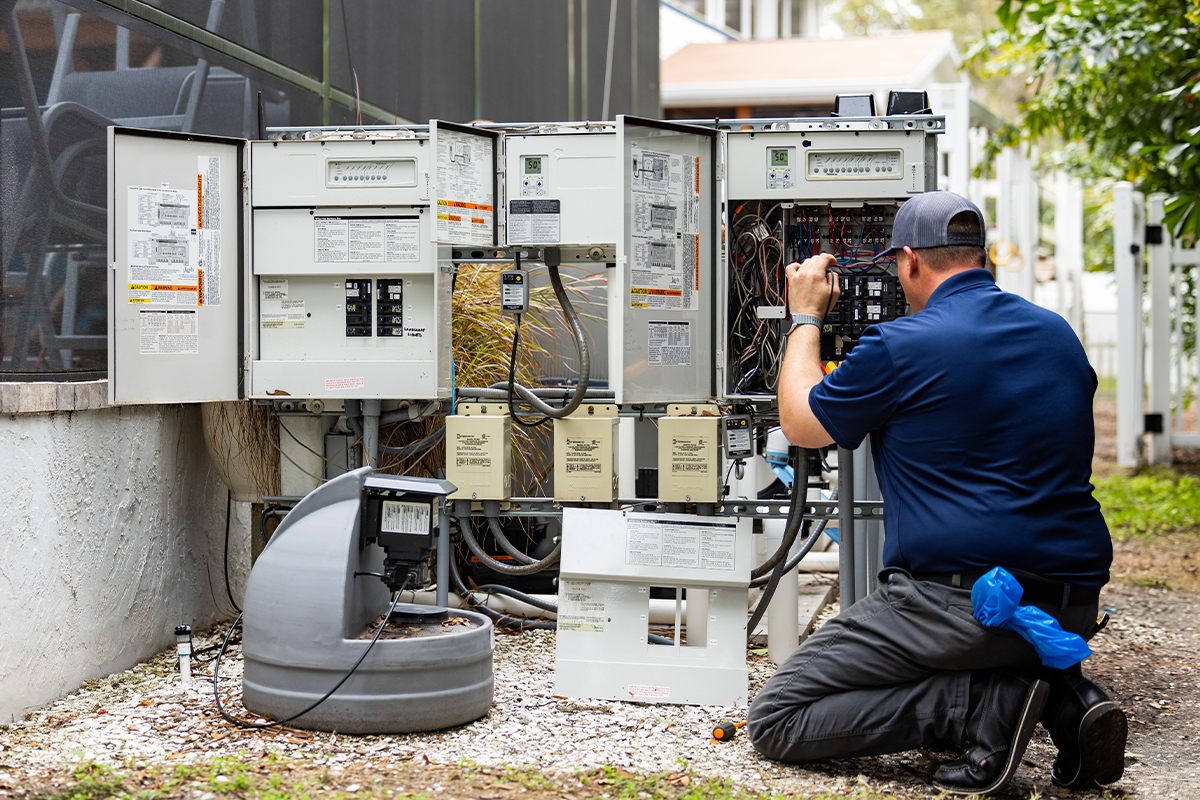
Electrical panels are often called a breaker box, circuit box or breaker board. Most electrical panels are a steel box located inside the home, garage or basement. Panels for outdoor equipment are often located outside. Enclosed in this box is the houses’s electrical system’s circuit breakers which are the main distribution point of electricity. Their main purpose is to regulate the amount of power going through each electrical circuit within the home to avoid serious hazards and to protect expensive appliances. Each circuit is hooked to a switch located within the box that ensures a safe amount of electricity is running through the home at any given time.
What Does A Breaker Panel Do?
Electrical panels are used to add a level or security or safety to your home or office. When dealing with live power flowing into the home, certain dangerous issues can arise. Things like electrical fires and power surges can be life threatening and can also damage expensive appliances and even the home itself. The breaker board regulates the amount of power to each circuit, usually by room, in the home by tripping or shutting off when an unsafe amount of power surges through it. The breaker is designed to take the brunt of the electrical surge so the more delicate multitude of circuits and wires in your home don’t have to.
How Does The Circuit Box Get Power?
Electricity comes from power lines outside the home. These feeder wires are connected to an electrical meter box located on the property. This box keeps track of your power usage so the electric company knows what to charge you each month. From there, the lines connect directly to your electrical panel where the power is controlled by circuit breakers that are designed to shut off if too much electricity surges through one. Too much power could cause safety hazards, like an electrical fire.
What Causes An Electrical Panel To Trip?
Too much power flowing though a single circuit is what causes a breaker to trip. A trip happens most often when too many appliances or high power items are plugged in to the same circuit. Breaker panels can also trip from outside power surges caused by storms, floods, lightning or other problems with the power source.
What Should You Do If Your Breaker Trips?
The first thing to do is find the location of your circuit breaker box. In Florida, they are usually located in the garage. Circuit breakers for outside equipment like lightning, air conditioning or pool pumps are usually located outside. Once located, open the box and find the switch that corresponds to where the power outage or surge has happened in your home. If a tripped breaker is the cause of the outage, the switch will be flipped in the opposite direction of all the other switches in the box. Most newer boxes are labeled with the corresponding circuits, or rooms to make it easier to diagnose the problem. Flip the switch back on and go back to the area of the outage to test the power. In most cases this will fix the problem. If it does not, you may have a larger problem on your hands. In that case you will need to call an experienced electrician.
What Appliances Are Known To Trip Circuit Breakers?
- Microwaves
- Toasters
- Old Appliances
- Hair Dryers
- Window Mounted Air-Conditioners
- Coffee Makers
What Appliances Should Have Their Own Circuit Breakers?
- Refrigerators
- Dishwashers
- Electric Ranges
- Ovens
- Garbage Disposals
- Freezers