
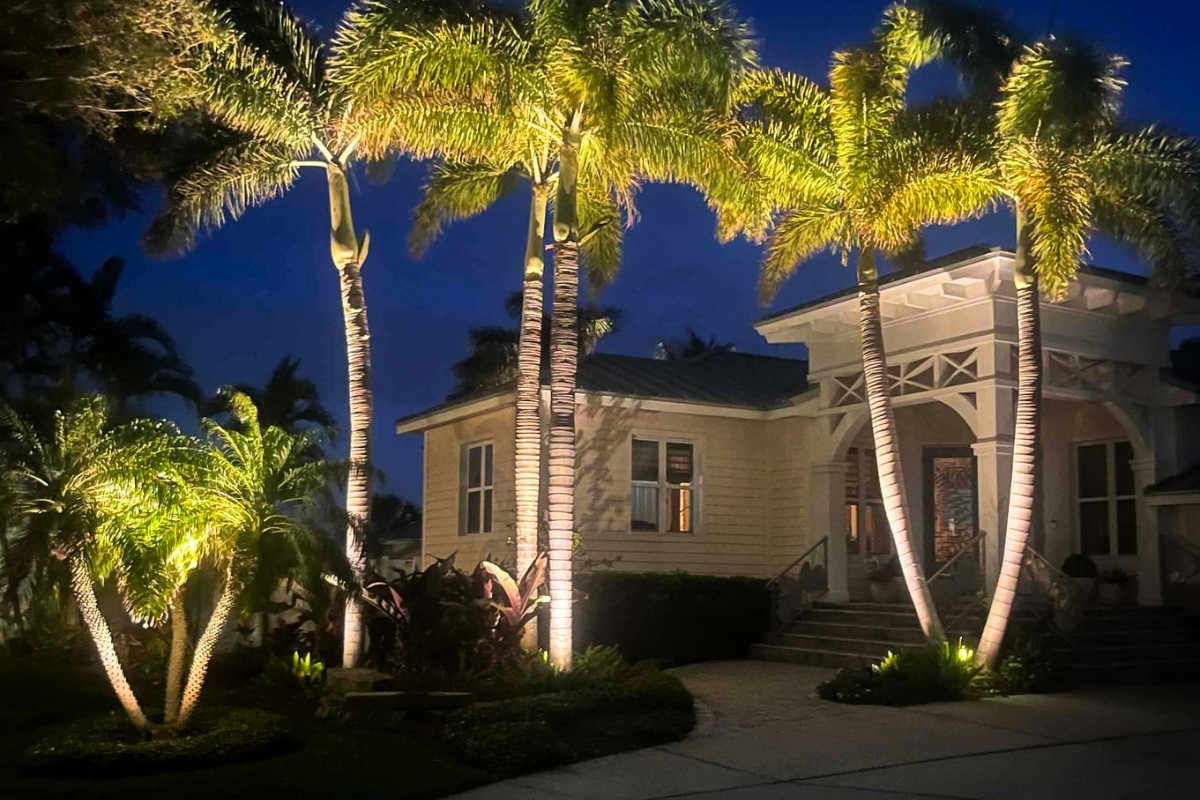
Landscape lighting can completely transform the way your home looks and feels at night. Done right, it highlights your home’s architecture, adds depth to your landscaping, and makes walkways and outdoor spaces safer to navigate.
But landscape lighting is more than placing a few lights in the ground. It’s a combination of design, electrical planning, and long-term reliability. Many homeowners only realize this after dealing with systems that look uneven, fail early, or create ongoing issues.
If you’re considering outdoor lighting, understanding what goes into a properly installed system can help you get better results from the start.
What Landscape Lighting Should Do for Your Home
A well-designed landscape lighting system should:
- Enhance curb appeal by highlighting key features of your home and yard
- Improve safety by lighting walkways, entry points, and outdoor living areas
- Create a balanced, natural look that adds depth without overwhelming the space
When done correctly, your home looks clean, intentional, and inviting at night instead of overly bright or uneven.

Why Professional Design Makes a Difference
The biggest difference between a basic setup and a professionally designed system is planning.
At Blue Collar Electric, we walk your property with you to understand how you use your outdoor space and what you want to highlight. From there, we design a layout that considers:
- Key focal points like trees, entryways, and architectural features
- Light distribution and beam spread
- Glare control and overall balance
- Creating contrast and depth for a more natural look
Without this level of planning, lighting can feel scattered or inconsistent.
Choosing the Right Fixtures for Each Application
A professional system uses multiple fixture types to create a layered effect. Not every light serves the same purpose.
Common fixture types include:
- Path lights for walkways and driveways
- Up lights for trees and architectural features
- Down lighting or “moonlighting” for a softer effect
- Flood lights for broader coverage
- Accent lighting for focal points
- Deck and step lighting for safety
- Wall wash lighting for larger surfaces
Using the right fixture in the right place is what separates a clean design from a cluttered one.

Electrical Design Is What Most People Overlook
Landscape lighting is just as much an electrical project as it is a design project.
A Blue Collar Electric technician ensures the system performs reliably by focusing on:
- Proper transformer sizing
- Balanced voltage across fixtures
- Correct wattage per light
- Capacity for future expansion
Even low-voltage systems require proper planning. Without it, lights can appear dim, uneven, or fail over time.
Wiring, Placement, and Long-Term Performance
How your system is installed determines how it performs. We install systems with long-term reliability in mind, including:
- Proper wire sizing to prevent voltage drop
- Weather-rated, secure connections
- Correct burial methods for wiring
- Thoughtful placement for easy adjustments and servicing
A system built correctly from the start will continue to perform and look great for years.
Why Hiring a Licensed Electrician Matters
Landscape lighting should improve your home’s appearance, increase safety, and add long-term value. The difference between a basic installation and a professionally designed system comes down to proper planning and execution.
If you’re thinking about upgrading your outdoor lighting, working with Blue Collar Electric ensures you get a system that looks right, performs reliably, and is built to last. We focus on delivering lighting systems that enhance your home without creating future problems. Every system is designed with safety, performance, and long-term use in mind.